There’s a growing disconnect in sports marketing that most brands haven’t fully reckoned with yet – visibility is no longer the same as impact.
For decades, sponsorship strategy has been built on the assumption that presence equals performance. Your logo on the LED board. Your name on the Jumbotron. Your brand stitched into the fabric of the venue. It was a game of exposure, measured in impressions and justified by reach.
But in the WNBA, that model is quietly, and quickly, breaking down.
The WNBA has evolved into something far more meaningful than a traditional sports property. It’s a cultural signal representing progress, equity, and authenticity in a way that resonates deeply with its audience. That audience is not passive. WNBA fans are highly engaged, socially aware, and values-driven in how they show up and what they support.
Brands like Ally, CarMax, and Mars aren’t just attaching their names to the league, they’re aligning with what it represents. Others like Booking.com and Planet Fitness are tapping into a fanbase that sees lifestyle, identity, and sport as interconnected.
Meanwhile, emerging and culturally attuned brands like Mielle, Skims, and Raising Cane's recognize something even more important – this is an audience that rewards brands that show up the right way.
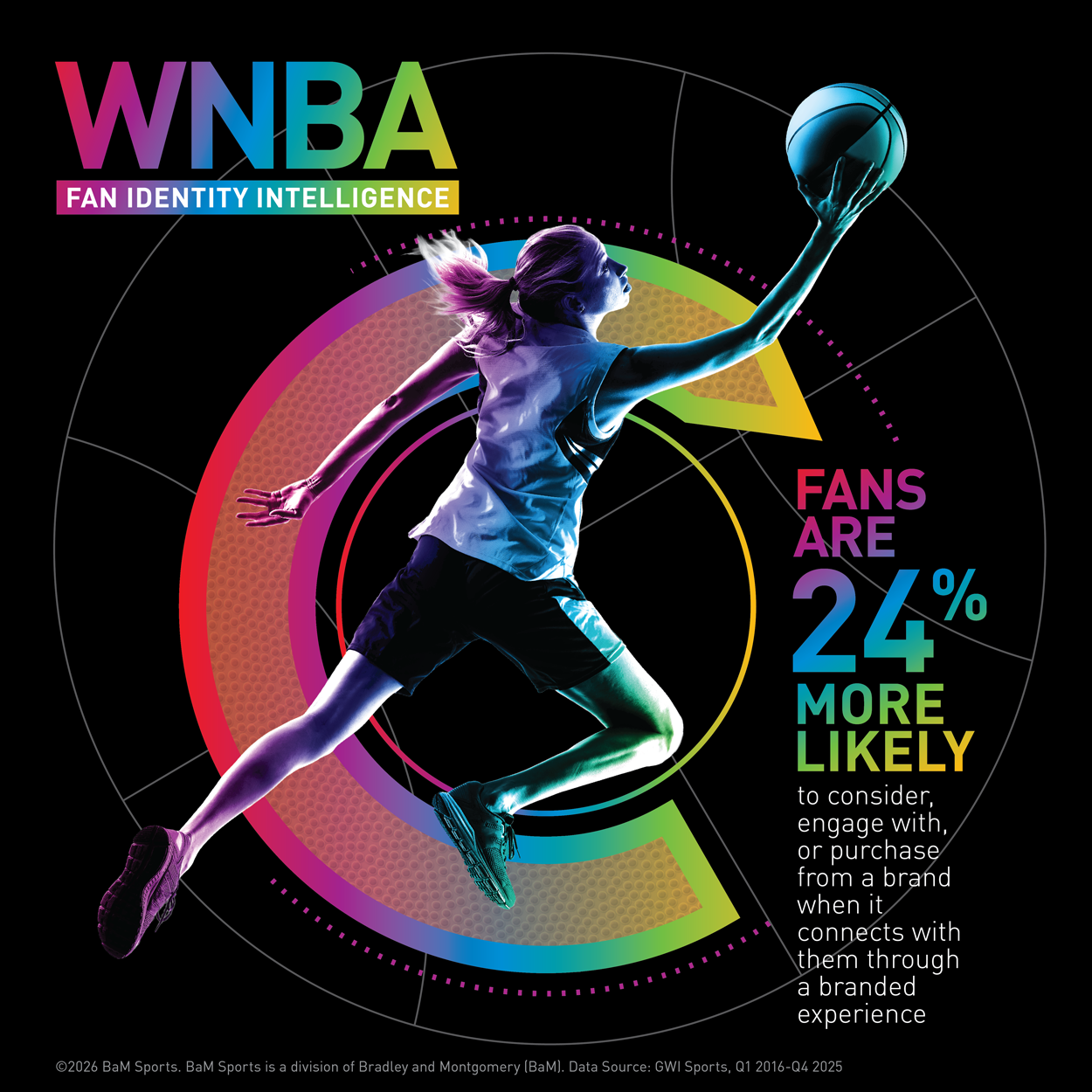
Traditional sponsorship placements, like naming rights, jumbotron logos, and static or LED signage still dominate arenas, but their influence on brand consideration, engagement, and purchase intent lags behind experiential approaches. WNBA fans are 24% more likely to consider, engage with, or purchase from a brand when it connects with them through a branded experience rather than relying solely on traditional in-venue advertising.
That impact should force a rethink.
Many of the brands investing in the league, from Ally to CarMax, have historically relied on scale-driven visibility models. But in the WNBA, scale without substance doesn’t translate the same way.
This isn’t just about novelty or entertainment. It’s about alignment. Branded experiences work in the WNBA because they allow brands to participate in the culture, not just interrupt it. A courtside LED board says: “We paid to be here.” An activation says: “We understand why you’re here.” That distinction matters. WNBA fans aren’t just attending games – they’re engaging with a community and a set of shared values. Experiences that feel authentic, inclusive, and additive to that environment earn attention because they respect the fan’s mindset.
Traditional sponsorship is optimized for visibility. Experiential sponsorship is optimized for memory. A brand like Booking.com can run signage all game long, but a well-designed activation that helps fans imagine their next trip, or rewards them in real time, creates a lasting association.
Similarly, Planet Fitness has an opportunity to move beyond messaging and into participation bringing wellness, accessibility, and community directly into the arena experience.
In a league where cultural relevance is the currency, time spent with a brand matters more than time exposed to it.
Too many brands still approach the WNBA with a legacy playbook: Secure assets, maximize exposure and track impressions. But that approach ignores the value of the fan experience, and if your brand isn’t enhancing that experience, it risks becoming invisible no matter how prominent the placement.
The brands that are breaking through in the WNBA aren’t asking, “Where can our logo go?”
They’re asking, “What does participation look like?” “Where can we show up meaningfully?” And “How can we contribute to the energy of the game?”
At BaM Sports we see this shift as a recalibration of what sponsorship is meant to do. Exposure still has a role, but it’s no longer the engine of impact. Experience is. Branded experiences and pop-up activations are not “add-ons” to a sponsorship strategy. They are becoming the primary drivers of effectiveness. Because in today’s environment, fans don’t reward brands for showing up. They reward brands for showing they understand. And in the WNBA, that understanding is best expressed not on a screen, but in an experience.